Why Romans 7 Happens: The Pain Of Self Dependence, And The Mercy Hidden In The Struggle
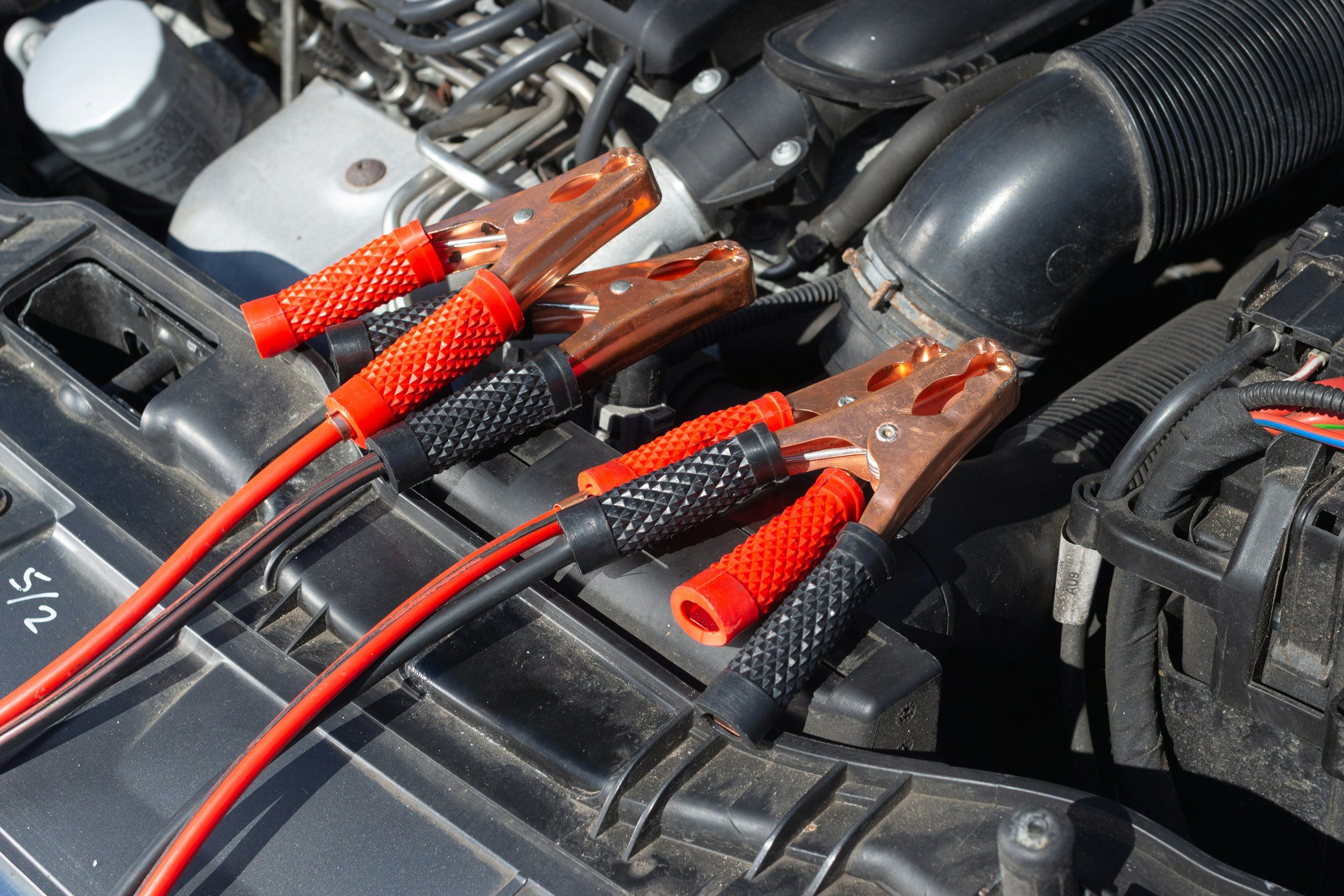
Romans 7 shows the dead battery of self dependence, Romans 8 reveals the true source of life in the Spirit.
If you have ever read Romans 7 and thought, “That is me,” you are not alone.
There is a sound in Romans 7 that many sincere believers recognize immediately. It is the sound of someone who loves what is right, yet cannot seem to live what is right. It is the sound of inner conflict, not the conflict of a rebel shaking a fist at God, but the conflict of a believer who truly wants to honor Him and is tired of failing.
For some, Romans 7 has become a strange kind of companionship. It gives words to what many have been afraid to say out loud.
I do not do what I want.
I do the thing I hate.
I keep trying, and I keep falling.
If that language has ever sounded like your inner world, hear this clearly from the beginning. Romans 7 is not in the Bible to shame you. It is in the Bible to name what happens when a believer tries to live the Christian life from the wrong source.
Romans 6 shows us what has already happened in Christ. We died with Him, we were raised with Him, we are alive to God in Him
(Romans 6:3–11).
Romans 7 describes what it feels like when we sincerely believe those truths, yet still try to carry them out through self dependence.
Romans 8 shows the way of Spirit dependence, where the life of Christ is expressed in and through the believer by the indwelling Spirit (Romans 8:1–4, Romans 8:9–11).
So Romans 7 is not a detour from grace. It is one of the ways God exposes the last place we still trust ourselves.
The Law Is Good, But The Law Cannot Supply Life
Paul begins with a statement that is both honest and startling.
The law is spiritual, but I am of flesh (Romans 7:14).
Notice what Paul does first. He honors the law. He does not insult God’s commands. He does not claim the standard is too high or unfair. He calls the law spiritual, meaning it is holy, God given, and true to God’s character (Romans 7:12).
Then he puts the spotlight where it belongs. The problem is not God’s commands. The problem is the human condition when it tries to obey God apart from God.
The law can show you what is right, but it cannot give you the life to do what is right. The law can diagnose, but it cannot heal. It can reveal sin, but it cannot resurrect the heart.
That is why the law is so effective at exposing, and so powerless at transforming. It was never designed to be the engine. It was designed to be a mirror that makes you realize you need a new source.
Paul says this plainly elsewhere. The letter kills, but the Spirit gives life (2 Corinthians 3:6).
And he says the law was like a guardian that shut every mouth, so that the promise would be received by faith, not by human effort (Galatians 3:22–24).
Romans 7 shows what it looks like when a believer tries to turn the mirror into an engine.
The Cycle Of Romans 7
Sincere, Exhausted, And Stuck
Paul describes the cycle in words that are almost painful in their honesty.
I do not understand my own actions.
For I do not do what I want, but I do the very thing I hate (Romans 7:15).
This is not casual sin. This is not indifference. This is not someone shrugging at God. This is the cry of a person who cares.
Romans 7 is not a chapter for rebels. It is a chapter for weary strivers.
That matters, because many sincere believers have been told that if they struggle, they must not be real Christians. Yet Paul says something that should arrest that assumption. I have the desire to do what is right (Romans 7:18).
Desire matters. A dead heart does not grieve sin. A dead heart does not long for what is right. A dead heart does not experience that ache of contradiction.
In many cases, the struggle is not proof that you do not belong to Christ. The struggle is proof that you do. The Spirit has awakened desire. The believer has tasted what is good. The inner being delights in the law of God (Romans 7:22).
And yet, the person still finds themselves unable.
I have the desire to do what is right, but not the ability to carry it out (Romans 7:18).
That is the pain of self dependence.
Why Romans 7 Hurts
Because The Word “I” Becomes The Engine
One of the clearest features of Romans 7 is how saturated it is with the word “I.”
I want.
I do not.
I do.
I hate.
I will.
I fail.
Paul is not telling this story to make us self focused. He is showing what happens when the self becomes the engine.
The “I” is trying to be godly. The “I” is trying to obey. The “I” is trying to keep the law. The “I” is trying to produce righteousness.
And the result is not peace. The result is inner war.
Romans 7 is what happens when a Christian tries to live for God from their own resources. Not because they do not love Him, but because they are still trying to produce what only Christ can supply.
This is why Romans 7 feels so miserable. The person in Romans 7 is not saying, “I do not care.” They are saying, “I do care, and I still cannot do what I want.”
This is also why the chapter often produces shame.
If you love God, why do you keep falling.
If you agree with His Word, why does your body still pull you.
If your intentions are sincere, why does your life feel stuck.
Romans 7 names it. There is agreement in the mind, yet resistance in the members. There is inward delight, yet outward captivity. There is desire in the will, yet weakness in the flesh
(Romans 7:22–23).
That is not an excuse for sin. It is an exposure of the wrong source.
A Gentle Clarification
Not Two Selves, But Two Principles At War
Many believers read Romans 7 and wonder, “Are there two people inside of me.”
Scripture speaks in a more careful way.
If you are in Christ, you are a new creation (2 Corinthians 5:17).
Your old man was crucified with Christ (Romans 6:6).
You have been made alive together with Christ (Ephesians 2:4–6).
So the believer is not a split personality. Yet there is a real conflict.
Paul describes it as the flesh warring against the Spirit (Galatians 5:16–17).
He describes it as sin dwelling in the members, not as the truest identity of the believer, but as an active principle that seeks to pull the believer back into self sourced living (Romans 7:17, Romans 7:23).
This is why Romans 7 can feel so confusing. The believer’s heart genuinely delights in God, yet the old patterns of the flesh still attempt to function as a competing source.
Romans 7 is the misery of trying to defeat the flesh with the flesh.
The Precious Turning Point
From How To Who
Then Paul reaches the point where the cycle becomes unbearable.
Wretched man that I am. Who will deliver me from this body of death (Romans 7:24)?
This is one of the most precious moments in Romans 6 to 8, because this is the moment the question changes.
Romans 7 begins with the assumption, “How do I do this.” How do I obey. How do I become holy. How do I stop sinning. How do I fix myself.
But Romans 7 ends with a different question.
Who will deliver me.
Not what strategy will save me. Not what discipline will finally work. Not what method will solve the problem.
Who.
A Person.
A Deliverer.
This is the mercy hidden inside Romans 7. The chapter is designed to bring self confidence to the end of itself. Not to crush you, but to remove the illusion that the self can be the source of the Christian life.
Romans 7 is doing honest work when it leads you to say, “I cannot be my own source.”
And when that question rises in you, when your self reliance collapses and all you have left is a cry, that is not failure. That is Romans 7 doing what it was meant to do. It is leading you out of self dependence and into union dependence.
The Answer Is Immediate
Thanks Be To God Through Jesus Christ Our Lord
Paul answers his own cry.
Thanks be to God through Jesus Christ our Lord (Romans 7:25).
Notice what he does not say.
He does not say, “Thanks be to God, now I have figured it out.”
He does not say, “Thanks be to God, now I have the power.”
He says, “Thanks be to God through Jesus Christ.”
Deliverance is not an idea. Deliverance is not a technique. Deliverance is a Person.
This is where Romans 8 begins.
There is therefore now no condemnation for those who are in Christ Jesus (Romans 8:1).
And then Paul says something breathtakingly clear.
The law could not do it, weakened by the flesh, but God did it. He sent His Son, condemned sin in the flesh, so that the righteous requirement of the law might be fulfilled in us, who walk not according to the flesh but according to the Spirit (Romans 8:3–4).
Romans 7 is the agony of self dependence.
Romans 8 is the life of Spirit dependence.
So What Do We Do With Romans 7
First, we do not make Romans 7 our home. God does not intend for you to live there forever. The normal trajectory of Romans 6 to 8 is that Romans 7 becomes a passage you recognize, not a room you occupy.
Second, we also do not pretend Romans 7 is not real. Many sincere believers have lived there. Many are living there today. So if Romans 7 is describing your inner world, do not interpret that as God rejecting you. Interpret it as God exposing the last place you are still trying to be your own source.
If you hear yourself speaking the language of Romans 7, “I, I, I,” you do not need to panic. You do not need to bargain. You do not need to make another promise in the energy of the flesh.
You can simply turn your heart toward the One Paul points to.
Not, “How will I fix this.”
But, “Who will deliver me.”
And you will find what Paul found. The Deliverer is not far away. He is present. He is not asking you to produce life. He is inviting you to receive it.
A Real Life Picture
When The Battery Is Dead
Picture a car in your driveway with a dead battery. The lights will not turn on. The engine will not crank. You can sit in the driver’s seat and push every button you want. You can turn the key again and again. You can even feel deeply sincere about getting the car moving.
But sincerity does not supply power.
At some point, you stop trying to make the car generate electricity from within itself. You reach for an outside source. A jump starter. Another car. A power supply. Something that provides what the car cannot produce on its own.
Romans 7 is the moment you realize the battery is dead. The law can tell you the car should run. Your will can long for the car to run. But self dependence cannot supply the power.
Romans 8 is the moment you connect to the true source, the Spirit of life in Christ Jesus (Romans 8:2).
So if you are in Romans 7 today, the invitation is simple. You can quietly say, “Lord, I stop trusting myself as the source. I trust You to express Your life in me and through me in this moment.” Then you take the next simple step in dependence, and you watch what only Jesus can do.
Closing Prayer Of Confidence
Father, thank You that You did not hide this struggle from us. Thank You that You placed Romans 7 in Your Word so weary believers would not feel alone, and so we would not mistake self dependence for sanctification.
Thank You that the presence of desire for what is right is itself evidence of Your work, and thank You that You never intended for the law to be our source. Thank You that You have already provided the Deliverer, and that deliverance is found through Jesus Christ our Lord.
Lord Jesus, thank You that You are not far away, and that You are not asking me to produce life from myself. Thank You that You are my life, and that Your Spirit supplies what the law could never produce through my striving. I rest in Your finished work, and I trust You to express Your life in me and through me today.
Amen.
Scripture References
Romans 6:3–11, Romans 6:6, Romans 6:11, Romans 7:12, Romans 7:14–25, Romans 7:15, Romans 7:17–18, Romans 7:22–25, Romans 8:1–4, Romans 8:2, Romans 8:3–4, Romans 8:9–11, Galatians 3:22–24, Galatians 5:16–17, Philippians 3:9, 2 Corinthians 3:3–6, 2 Corinthians 5:17, Ephesians 2:4–6, 1 Corinthians 6:17