When Fear Comes Back
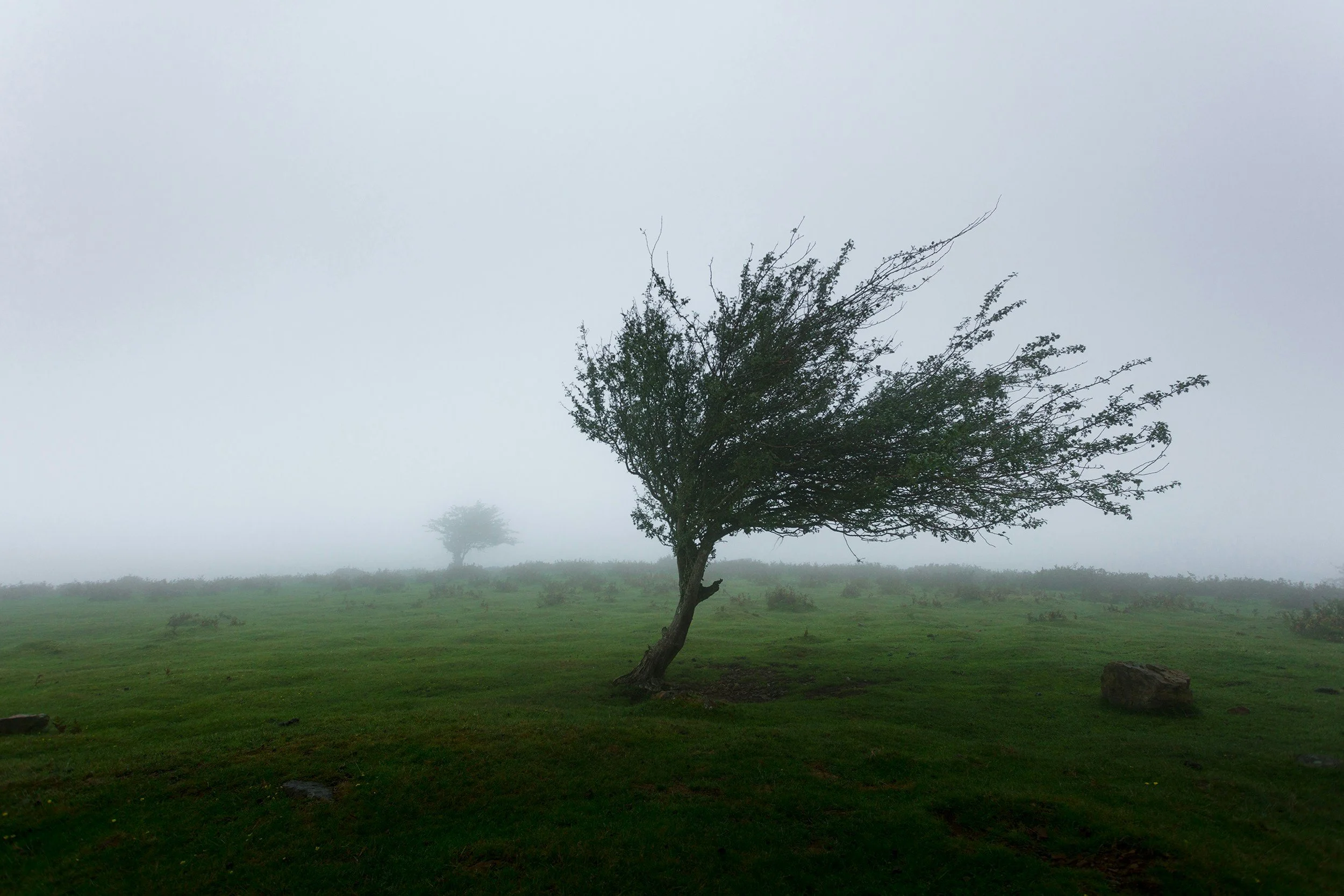
A tree bending in the returning wind, reminding us that fear may move the branches without changing where our life is rooted. In Christ, we are not starting over. We are continuing the walk.
You Are Not Starting Over. You Are Continuing the Walk with Christ
A good day can feel like evidence that something has finally changed.
Your thoughts are not moving as quickly. Scripture brings your attention back to Christ. You recognize fear without obeying it. You take the next step without trying to manage every possible outcome. By the end of the day, you may even think:
I am finally learning to rest in Christ.
Then morning comes, and the fear is there again.
Your body sounds the alarm before you have time to understand why. A familiar thought returns. The old desire to control, withdraw, overthink, or protect yourself begins to rise.
Then another thought joins the fear:
I am back at the beginning.
That conclusion can become more exhausting than the fear itself. You are no longer dealing only with an anxious moment. You are now questioning your growth, your faith, and your entire understanding of the abiding life.
Did yesterday matter?
Was the trust real?
If Christ is changing me, why does this still happen?
Colossians 2:6–7 gives us a better way to understand the return of fear:
“Therefore, as you received Christ Jesus the Lord, so walk in him, rooted and built up in him and established in the faith, just as you were taught, abounding in thanksgiving.”
The return of fear does not mean you have been removed from Christ.
You are not starting over.
You are continuing the walk with Him.
Part One: The Theological Exposition
This Is Who You Are in Christ
Colossians 2:6–7 is not originally a passage about anxiety. Paul is writing to believers who are in danger of being drawn away from the sufficiency of Christ.
That context matters.
The Colossians were encountering ideas that promised spiritual fullness through something beyond the Christ they had received. Paul warns them about philosophy and empty deceit, human tradition, worldly principles, religious regulations, ascetic practices, and spiritual experiences that appeared impressive but were not according to Christ.
Paul’s answer is not to give them a new religious method.
He brings them back to Jesus:
“As you received Christ Jesus the Lord, so walk in him.”
The Christian life does not begin with Christ and then progress beyond Him into some higher source of spiritual life. The believer receives Christ and continues in Christ.
This is the controlling point of the passage.
As you received Christ, continue in Him
The Colossians had received Christ Jesus as Lord through the gospel. They had not earned Him through law-keeping, religious achievement, emotional strength, or spiritual discipline. They had heard the truth, believed in Christ, and been brought into Him by grace.
Paul now tells them to continue in the same Christ.
The phrase “Christ Jesus the Lord” is important. Jesus is not presented merely as a source of emotional relief. He is the Messiah, the Savior, and the Lord. The Christian walk is lived under His lordship and from His sufficiency.
Paul is not saying:
You received Christ by grace. Now complete the Christian life from yourself.
He is saying:
The Christ you received is the Christ in whom you continue to walk.
That has direct significance when fear returns.
The anxious mind often assumes that the Christian life works like this:
Christ helped me yesterday.
Fear returned today.
Now I need to recover what I lost.
But Paul gives us another framework:
You received Christ.
You remain in Christ.
You walk in Christ.
You are rooted in Christ.
You are being built up in Christ.
The return of fear does not create a new spiritual starting line.
A walk, a root, and a building
Paul combines three different pictures.
He speaks of a walk.
He speaks of being rooted.
He speaks of being built up.
Each picture adds something to our understanding of the Christian life.
The walk
To walk in Christ is to live the whole of life in relationship to Him, under His lordship, and from His saving sufficiency.
A walk happens one step at a time.
Paul does not describe the Christian life as one uninterrupted emotional experience. He describes it as a continuing way of life.
Some steps are taken with a clear mind and settled emotions.
Other steps are taken while fear is present, questions remain, and the body still feels the strain of the moment.
Both can belong to the same walk.
The returning fear does not mean you have left the path. It means another step of faith is now in front of you.
The root
The phrase “rooted in him” describes something God has already established. The original wording points to a completed rooting with continuing results.
The believer does not plant himself into Christ every morning.
God has rooted the believer in His Son.
Your union with Christ is not recreated each time you feel close to Him. It is not dissolved each time fear returns. It is not strengthened by an emotionally settled day and weakened by a difficult morning.
Your settled emotional state was never the root.
Christ is the root and source of your life.
This does not mean feelings are unimportant. It means feelings do not determine where your life is located.
Paul says elsewhere:
“For you have died, and your life is hidden with Christ in God.”
Colossians 3:3
Fear may change what you feel.
It does not change where your life is hidden.
The building
Paul also says believers are “being built up in him.”
This is ongoing.
The believer has been rooted in Christ, and the believer is also being built up in Christ. The settled reality of union and the continuing work of formation belong together.
That gives us a helpful distinction:
Your place in Christ is settled.
Your growth in living from Christ is ongoing.
The recurrence of fear does not overturn the first. It becomes part of the context in which the second continues.
You may encounter the same fear more than once. But you are encountering it as one whom God is building in Christ.
You may recognize it sooner.
You may bring it into the light more honestly.
You may resist its interpretation more quickly.
You may turn toward Christ before fear governs the whole day.
You may still feel weak, yet take a faithful step that you once would have avoided.
Those are not insignificant changes. They are part of being built up in Him.
Established in the faith
Paul also says believers are being “established in the faith, just as you were taught.”
This protects us from turning the abiding life into vague inward spirituality.
The answer to returning fear is not simply to look within and search for a feeling of Christ’s presence. The Colossians are to remain grounded in the apostolic truth they received.
The Christ in whom we walk is the Christ revealed in Scripture.
He is the image of the invisible God.
All things were created through Him and for Him.
He holds all things together.
He is the head of the church.
He reconciles through the blood of His cross.
In Him all the fullness of deity dwells bodily.
Believers have been filled in Him.
They have been buried and raised with Him.
Their sins have been forgiven.
The record that stood against them has been set aside through the cross.
The hostile powers have been disarmed through Christ’s victory.
That is the Christ of Colossians.
So when fear returns, faith does not invent a comforting meaning. Faith returns to what God has revealed and accomplished in His Son.
Thanksgiving belongs to the walk
Colossians 2:7 ends with a phrase that can easily be overlooked:
“Abounding in thanksgiving.”
Thanksgiving is not added as a devotional ornament. It belongs to Paul’s answer to the false teaching threatening the Colossians.
False teaching says Christ is not enough.
Thanksgiving says:
In Christ, God has already given what I could never obtain for myself.
Fear tends to direct the mind toward what is absent, unresolved, threatening, or beyond our control.
Thanksgiving directs the heart toward what God has already made true in Christ.
This does not mean thanking God that fear has returned. It means remembering, in the middle of its return, that Christ has not changed.
Thank You that I am still in Christ.
Thank You that the Spirit still dwells in me.
Thank You that the throne of grace remains open.
Thank You that Your mercy is not exhausted.
Thanksgiving does not deny the difficult morning.
It locates that morning inside the grace of God.
Recurring fear and progressive sanctification
The New Testament presents sanctification as both decisive and ongoing.
Something decisive has happened to the believer in union with Christ. The old self was crucified with Him. The believer has been raised with Him. Sin’s dominion has been broken. The Spirit has been given. The believer belongs to God.
Yet the Christian is also being renewed, formed, trained, corrected, and transformed.
That means the presence of an old reaction does not prove that nothing decisive has happened.
The recurrence of temptation is not the same thing as surrendering to temptation.
The return of a fearful thought is not the same thing as accepting its interpretation.
The body’s alarm is not the same thing as a decision to distrust God.
The desire to control may rise before you consciously choose anything. What matters next is not whether you can produce instant composure. What matters is where you turn and what begins to govern you.
Fear may appear.
But does fear become lord?
Does it decide what God is like?
Does it determine your identity?
Does it govern the next action?
Or is the fear brought into the light of Christ?
Growth is not measured only by whether fear appears. It can also be seen in what governs you when fear appears.
John 15 and the continuing life of the branch
Jesus says:
“Abide in me, and I in you.”
John 15:4
Abiding is not a method for creating union with Christ. It is the lived expression of dependence on the Christ to whom the believer belongs.
The branch does not become connected to the vine each morning because it feels alive. It receives life because it remains in the vine.
In the same way, yesterday’s sense of rest was not your source.
Christ was.
You do not need to reproduce yesterday’s emotional state in order to continue with Him today.
The anxious mind may say:
How do I get back to where I was?
But the abiding question is different:
How do I live from Christ in the day that is actually here?
You do not need yesterday’s experience.
You need the same living Lord.
He remains the Vine.
His Spirit remains within you.
His Word remains true.
The invitation remains:
Abide in Me.
Hebrews 4 and the throne that remains open
Hebrews 4 tells us that Jesus is our great High Priest. He has passed through the heavens. He understands human weakness. He was tempted in every respect as we are, yet without sin.
Then Scripture says:
“Let us then with confidence draw near to the throne of grace, that we may receive mercy and find grace to help in time of need.”
The return of fear creates a time of need.
Hebrews does not tell the believer to master the need before drawing near.
It says to draw near in the need.
This is a vital distinction.
Self-reliance says:
Get yourself settled before you come.
Grace says:
Come through Christ and receive what you need.
Your confidence does not rest in the clarity of your thoughts, the steadiness of your body, or the success of yesterday.
Your confidence rests in Jesus.
He is the High Priest.
He has opened the way.
He sympathizes with weakness.
The throne is a throne of grace.
The mercy has not run out.
When fear returns, drawing near again does not prove you have gone backward. It proves that faith is responding to the invitation of God.
The return to grace is not the collapse of the abiding life.
It is one of the clearest expressions of it.
Matthew 11 and the dependence we never outgrow
Jesus says:
“Come to me, all who labor and are heavy laden, and I will give you rest.”
Matthew 11:28
He then says:
“Take my yoke upon you, and learn from me.”
The rest Jesus gives is not detachment from discipleship. It is life under His gracious lordship, learning from Him and walking with Him.
Jesus gives the weary Himself.
Many believers quietly assume that maturity should mean needing Christ less often in a familiar place of weakness.
But dependence is not an early stage of Christianity.
Dependence is the Christian life.
The mature branch does not become less dependent on the vine. It becomes more fully expressive of the vine’s life because it continues to receive.
The evidence of growth may not be that fear never returns. Growth may be that when it does, you recognize your need without interpreting that need as rejection.
You come to Christ.
You receive His Word.
You depend on His Spirit.
You take the next step.
Needing Christ again is not regression.
It is the truth of the Christian life coming into view again.
Lamentations and mercy for this morning
Lamentations 3 says:
“The steadfast love of the Lord never ceases;
his mercies never come to an end;
they are new every morning;
great is your faithfulness.”
Those words were not written from comfortable circumstances. They arise in the middle of grief, ruin, covenant judgment, and loss.
The speaker does not look at an easy morning and conclude that God is faithful.
He looks at devastation and remembers the covenant love of the Lord.
That context matters when fear returns.
God’s mercy is not new every morning because every morning feels new.
His mercy is new because His compassion is never exhausted.
Yesterday’s mercy was real.
Today’s mercy is present.
If fear returns tomorrow, it will not arrive before the faithfulness of God.
The Father will still be your Father.
Christ will still be your life.
The Spirit will still dwell in you.
The Word will still be true.
The throne of grace will still be open.
Tomorrow is not outside your Father’s care.
This is who you are in Christ
If you belong to Christ, you are not a frightened person trying to become rooted.
You have been rooted in Christ.
You are not attempting to reconstruct your union with Him each morning.
Your life is already hidden with Christ in God.
You are not left to complete the Christian life from your own resources.
You are being built up in Christ.
You are not established by the strength of your emotions.
You are established in the faith you received.
You are not required to turn fear into composure before drawing near.
You have a compassionate High Priest and an open throne of grace.
You are not immature because you still need Jesus.
Dependence on Him is the life of the branch.
You are not returning to the beginning every time fear returns.
You are continuing the walk with Christ.
Part Two: The Living Picture
The Tree and the Returning Wind
Imagine a tree standing in an open field.
Yesterday was still. The branches rested. Sunlight reached the leaves. Nothing seemed to strain the tree.
Then, during the night, the wind returned.
By morning, the branches were moving again. The leaves were turning. The whole tree appeared disturbed.
Someone looking only at the branches might say:
Nothing changed. The tree is back where it started.
But that would not be true.
Yesterday’s stillness did not create the roots.
Today’s wind does not remove them.
Beneath the ground, the tree remains rooted. Its life continues to come from the same source. Even while the branches move, the roots hold. Growth continues in places the eye cannot immediately see.
That is a picture of recurring fear.
A settled day may allow you to notice the rest Christ gives.
A difficult morning may make the old movement visible again.
But the returning wind does not decide where the tree is rooted.
Fear may move your thoughts.
It may affect the body.
It may make the day feel different from yesterday.
But if you are in Christ, your root has not moved.
And the tree does not need to recreate yesterday’s weather.
It continues receiving life where it has been planted.
You do not need to recreate yesterday’s peace.
You continue receiving from Christ today.
The wind returned.
The root remains.
Part Three: The Grace-Formed Walk
Because This Is Who You Are, This Is How You Live
Because you are rooted in Christ, the return of fear calls for dependence, not a verdict against yourself.
The grace-formed response begins with what God has made true, not with what fear says the moment means.
Begin with settled truth
When fear returns, you may instinctively begin evaluating yourself:
Why is this happening again?
What did I do wrong?
Why did yesterday not last?
Before those questions become a judgment, return to what is already true.
You might pray:
Father, thank You that my life is in Christ.
Thank You that Your Spirit dwells in me.
This fear is here again, but it has not moved me outside Your Son.
I entrust this moment to You. Let the life of Jesus be expressed in the step before me.
This is not using doctrine to avoid reality.
It is bringing reality under doctrine.
Do not make recurrence your identity
Fear returning does not mean you have become the old person again.
An old pattern may speak.
A bodily reaction may rise.
A familiar interpretation may appear.
But these things are not your identity.
You can say:
Fear has returned.
You do not need to say:
Fear is who I am.
You can say:
My mind is moving toward control.
You do not need to say:
Nothing is changing.
You can say:
I feel the old pull to withdraw.
You do not need to say:
I am back at the beginning.
The believer can acknowledge the experience without giving it the right to interpret the whole story.
Draw near before you start managing
Fear often urges immediate self-management.
Fix the feeling.
Stop the thought.
Get control.
Recover the state you had yesterday.
Hebrews gives another first movement:
Draw near.
Come through Christ before you try to organize yourself.
Bring the fear honestly.
Bring the frustration that it has returned.
Bring the disappointment that growth does not look the way you expected.
Bring the concern that you may never move beyond this struggle.
You are not coming to an impatient God who has heard this too many times.
You are coming through Jesus to the throne of grace.
Receive the step that belongs to today
Paul says to walk in Christ.
A walk is made of steps, not one sustained emotional condition.
So ask:
What step belongs to today?
Get out of bed.
Complete the next task.
Open the message you have been avoiding.
Make the necessary call.
Ask a trusted believer to pray with you.
Read the passage that brings fear’s interpretation under the truth of Christ.
Rest because your body is worn down.
Seek pastoral guidance or appropriate medical care when fear is severe, new, frightening, or interfering with daily life.
The step may look ordinary.
But its source matters.
Self-effort says:
Take this step so you can regain control.
Abiding says:
Take this step while depending on Christ.
You do not need to live the whole week this morning.
Today has a faithful step.
Walk in Christ there.
Let thanksgiving interrupt fear’s interpretation
Paul includes thanksgiving in Colossians 2:7 because gratitude helps keep the believer anchored in the sufficiency of Christ.
Fear says:
This struggle is still here, so grace must not be working.
Thanksgiving says:
Christ is still my life.
Fear says:
I need something more than what I have received.
Thanksgiving says:
In Christ, the Father has already given me every spiritual blessing.
Fear says:
The need has returned.
Thanksgiving says:
The throne of grace remains open.
Thanksgiving does not force an emotion. It confesses the goodness of God in the middle of a difficult moment.
Measure growth by what governs you
It may be tempting to measure growth only by how often fear appears.
But Scripture points us toward a deeper question:
What governs you when fear appears?
Does fear decide who Jesus is?
Does fear determine what tomorrow means?
Does fear govern your words, choices, and relationships?
Or does the returning fear become another place where you turn toward Christ?
Growth may look like:
Recognizing fear before it governs the day.
Speaking plainly to the Father.
Receiving Scripture instead of agreeing with the old interpretation.
Allowing another believer to help.
Taking one act of obedience while fear remains present.
Returning to Christ without spending hours condemning yourself.
The goal is not flawless emotional continuity.
The goal is Christ expressed in and through the real life of the believer.
Return without calling the return a failure
The Christian life contains many returns.
We return to the Word.
We return to prayer.
We return from distraction.
We return after self-reliance.
We return when fear has begun interpreting life again.
These returns do not mean Christ repeatedly leaves us.
They mean we are learning to live consciously from the One who never does.
The branch returns its attention to the Vine because the Vine remains its source.
So when fear comes back, return with it to Christ.
Not as one seeking to be saved again.
Not as one trying to persuade the Father to receive you again.
Come as one who has already been received in the Son.
Keep walking
The great temptation when fear returns is to stop.
Stop the day.
Stop trusting.
Stop obeying.
Stop believing that growth is real.
Colossians says:
Walk in Him.
Do not wait until every symptom is gone before taking the next step.
Do not wait until you feel as settled as yesterday.
Do not wait until you can guarantee how the day will unfold.
Walk in Christ in the day that is here.
Fear came back.
Your identity did not change.
Your root did not move.
Christ did not become less sufficient.
You are not starting over.
You are continuing the walk with Him.
For Deeper Reflection
What conclusion do you usually draw when fear returns?
Do you interpret recurrence as proof that nothing is changing?
How does the difference between being rooted and being built up help you understand your life in Christ?
Have you been trying to recreate yesterday’s emotional state instead of receiving from Christ today?
What does Hebrews 4 tell you to do with a time of need?
Have you treated dependence on Christ as a stage you should have outgrown?
What truth from Colossians 2 can you receive before passing judgment on yourself?
Where might thanksgiving help bring your attention back to the sufficiency of Christ?
What faithful step belongs to today?
A Prayer of Return
Father, thank You that You have rooted me in Christ and are building me up in Him. Thank You that the return of fear does not change my place in Your Son.
Yesterday’s trust was real. Your mercy is present today.
I bring this fear into Your light. I do not need to hide it, master it before coming, or interpret it as the end of growth.
Thank You for Jesus, my compassionate High Priest. Thank You that the throne of grace remains open and that mercy and grace are present in this time of need.
Lord Jesus, You are the Vine and my life. I yield my thoughts, words, choices, and actions to You. By Your Spirit, express Your life through me in the next faithful step.
Thank You that dependence is not failure. It is the life of the branch receiving from the Vine.
Your mercies are new every morning, and tomorrow remains in Your care.
I trust You with today.
In Jesus’ name, amen.
Scripture Trail for Further Study
Colossians 1:9–23
Colossians 2:1–15
Colossians 2:20–3:4
John 15:1–11
Hebrews 4:14–16
Matthew 11:25–30
Lamentations 3:19–26
Romans 6:1–14
Romans 8:1–17
Romans 8:26–39
Galatians 2:20
Galatians 5:16–25
Philippians 1:3–6
Philippians 2:12–13
2 Corinthians 3:17–18
2 Corinthians 4:7–18
1 Corinthians 15:10
Psalm 56:1–13